
The Mann Gulch fire was spotted at 12:25 p.m. on August 5, 1949, a very hot and windy day. The fire was in the Gates of the Mountains Wild Area (now the Gates of the Mountains Wilderness) just east of the Missouri River, 20 mi north of Helena, MT. Temperatures that day reached 97 °F in Helena.
Mann Gulch is a minor drainage, leading into the Missouri River from the east. It is funnel shaped, narrowing to a width of one-fourth mi at the river.
The highest flanking ridge, where the fire started, is on the south side of the drainage between Mann Gulch and Meriwether Canyon. The ridge on the north side of the drainage, where the fire overran the crew, is not as high as the ridge to the south.


The fire started near the top of a ridge between Mann Gulch and Meriwether Canyon. A team of 15 smokejumpers parachuted into Mann Gulch to fight a small lightning caused wildfire. They were joined by a recreation specialist/fire guard from the Helena National Forest named James Harrison, who walked into the fire. Harrison had been a smokejumper the two previous years but gave it up when his mother pleaded with him to take a less dangerous job. Making their way down the canyon, the smokejumpers soon found themselves in an ominous situation when the fire exploded into a raging inferno, trapping them on a steep ridge with no escape route.
Despite their training and experience, the smokejumpers struggled to survive against the fast-moving flames that consumed the dry grass and timber around them. Of the 16 men, two of the smokejumpers, Walter Rumsey and Robert Sallee were able to make it to safety at the top of the ridge. Fourteen of the men were overtaken by the smoke and flames. All perished except one who lit a fire in the grass ahead of the approaching fire and positioned himself in the burnt-out area. This was the crew foreman Wagner Dodge who was unable to get others to join him.
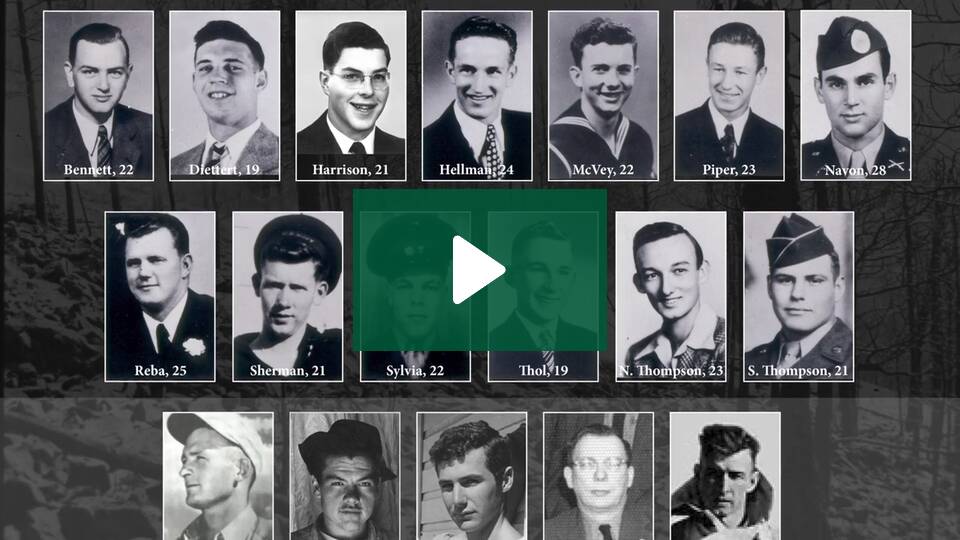
Of the 13 men that were killed in this disaster, 11 died in Mann Gulch and two were able to be evacuated to a hospital in Helena but soon died of their injuries. This became one of the deadliest firefighting disasters in U.S. history.

Photo credit: Samantha Orient
LEGACY OF THE FIRE
The Mann Gulch Fire of 1949 became a turning point in the history of wildland firefighting in the United States. The tragic loss of life and the heroic efforts of the smokejumpers who tried to contain the fire galvanized the firefighting community. The incident led to significant changes in wildland firefighting response strategies and training and inspired a renewed commitment to safety.
The lessons learned from this tragic event continue to influence modern wildland firefighting practices, emphasizing the importance of situational awareness, communication, and ongoing training to enhance the safety and effectiveness of firefighting operations.
IN THE MEDIA

“Red Skies of Montana” is a movie loosely based on the tragic Mann Gulch fire and stars some big Hollywood names. The world premiere was held on Jan. 20, 1952, at the Fox Theater in Missoula. Here are some facts about the movie (PDF) that can be seen on Youtube.


THE SURVIVORS: Dodge, Rumsey, and Sallee
The tragedy of Mann Gulch was the loss of those who perished in the fire, and it extends to include the three men who survived. The survivors brought clarity to the chaos. Even though many questions remained after the board of inquiry and the many books that have been written, there is no question in the minds of the survivors that their actions were instinctual and correct. The Mann Gulch story is not complete without a word about the survivors…
View full tribute to survivors, compiled by Denny Breslin
“ In 1949, the Smokejumpers were still so young that they affectionately referred to all fires they jumped on as “ten o’clock fires,” as if they already had them under control before they jumped. They were still so young that they hadn’t learned to count the odds and to sense they might owe the universe a tragedy”
Norman Maclean, Young Men and Fire
ADDITIONAL MATERIAL:
The 13th Fire
by Dave Turner
North Words Podcast about Mann Gulch fire
Mann Gulch Fire: A Race That Couldn’t Be Won
by Richard C. Rothermel
USFS Mann Gulch History – Missoula Fire Sciences Lab
VIDEO SERIES
“Smokejumping and Science: Montana’s Role in Wildfire Management History” from Montana: The Magazine of Western History

